How to Follow Up on Your LSA Leads
How to Follow Up on Your LSA Leads
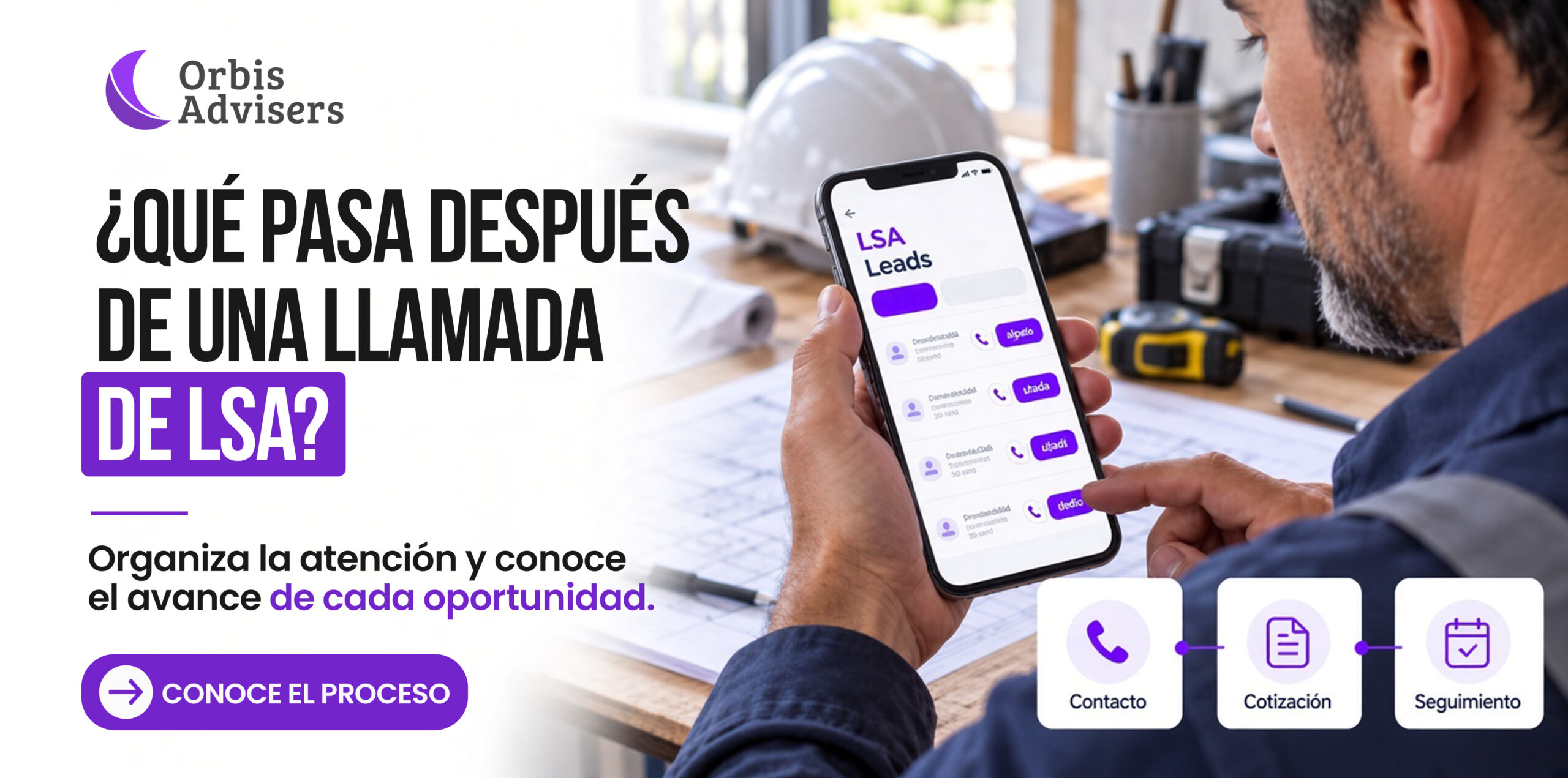
A homeowner calls while your team is working. The call is put on hold, and no one follows up to see who should return it. LSA’s lead tracking system needs a designated person in charge and a process to guide each request from the very first contact.
It’s a common scenario in service companies: the team is up on the roof, on a job site, or in the yard; the phone rings; and everyone assumes someone else will answer it. When that happens, the problem isn’t the campaign. It’s that the call came in and there was no process in place to handle it.
This article proposes a simple process for handling LSA calls and managing Local Services Ads quotes, based on Google’s official documentation: who answers the call, what information is recorded, how the business outcome is reviewed, and how all of this is cross-referenced with data from the platform.
Define who is responsible
Assign a primary contact and a backup for peak times. Verify that notifications and the customer service phone line are working. Google recommends responding quickly; missed calls can affect the responsiveness score used in ad ranking.
Google's documentation supports this on two points. The lead management page recommends responding to each lead as soon as it comes in and notes that a quick response time can help with ad ranking and lead volume. And the page on ad ranking lists responsiveness among the factors that influence how likely an ad is to generate a lead, and mentions that missed calls can affect it. The profile data also includes the average response time.
To ensure that “who is responsible” isn’t just an empty phrase, it’s a good idea to put these points in writing:
Period | What to Confirm |
Person in Charge | A person with a name, not “the team.” He knows it’s his responsibility to return every call or message. |
Support | Who takes over when the person in charge is at a construction site, on a site visit, or off duty? |
Notifications | Make sure notifications about new leads reach the right people and are sent to a device they check throughout the day. |
Customer Service Phone Number | Make sure your business line is active and receiving call forwarding. Google notes that the ad number forwards calls to your line, and if you have call forwarding or use VoIP, you may not hear the message “Call from Google.” |
How to Respond | Call, send a message, or decline the request. Google offers these three options, and a declined request can be reinstated if circumstances change. |
Here’s a practical tip: According to Google, when you respond to a lead, it moves to the active inbox, while inactive leads remain in a separate inbox from which you can still respond at any time. That means a pending request doesn’t disappear, but it’s not a good idea to leave it there either. Every day you wait is one more day for that person to hire another company.
A lead with no assigned person is a lead with no owner.
Registra lo necesario para avanzar
Note the date, requested service, project location, person in charge, and next step. You can use a CRM or a shared log with controlled access. After the conversation, confirm whether you need to schedule a visit, send a quote, or clarify any information. Agree on the next point of contact with the prospect.
You don't need a complex tool. A well-maintained shared spreadsheet is more useful than a CRM that no one updates. The important thing is that every request has the same fields, so anyone on the team can pick it up where off:
Field | What is it used for? |
Date | Find out how long the application has been open and compare time periods. |
Service Requested | Make sure it matches what you actually offer. |
Project Location | Please confirm that it is covered by your plan before getting a quote. |
Person in Charge | That there be someone to ask about that case. |
Next step | Prevent the request from being left unresolved: follow up with a visit, provide a quote, or offer clarification. |
Regarding controlled access, it is important that only those who need to see the record be able to view it, because it contains customer contact information and locations.
And regarding the last point—the next point of contact—promise only what you can deliver. If you say, “I’ll call you tomorrow,” agree on a specific day and time and write them down. A promise to return a call that isn’t kept weighs more heavily than not having made the promise at all.
Review the business results
Track inquiries received, people contacted, quotes, and closed deals. A pending opportunity requires follow-up; a lost opportunity needs a documented reason, such as price, turnaround time, or lack of response. This helps identify where the process is stalled.
Each stage answers a different question, and mixing them up is what makes the analysis confusing:
Stage | Question answered | Where to Look |
Inquiries Received | How many applications were received? | List of leads for the account. |
People contacted | How many were answered, and how long did it take? | Your service record. |
Quotes | How many of them received the quote that was sent? | Your business registration. |
Closed Jobs | How many of them turned into jobs? | Your business registration. |
This breakdown makes it easy to see where the process is stalling. If there are many inquiries but few people contacted, the bottleneck is in customer service. If there are contacts but few quotes, follow-up is lacking. If there are quotes but few closed deals, it’s worth reviewing the price, turnaround time, and clarity of the proposal.
For missed opportunities, always note the reason using the same categories, for example:
- Runtime.
- Lack of response from the prospect.
- Another reason, with a brief description.
As the weeks go by, that log reveals patterns that no advertising platform can show you, because it's data specific to your business.
Cross-reference the platform's data with your business registration
To evaluate your investment, cross-reference the advertising data with your business records. The platform may display contacts and positions, but closed deals and their amounts require confirmation from the business. Systematic tracking allows you to discuss results based on evidence.
Local Services Ads reports show, among other data, the leads converted into sales, total charges, cost per call, message, and booking, the list of leads received, and credits earned during the period. The reports page does not mention amounts or the value of the jobs. For reservations, Google offers the “Mark Booked” option in the inbox, where you can add a date and follow-up details; however, you must mark them manually, and this feature is only available in the United States and Canada.
It’s also important to remember that a lead’s status may change during the reevaluation process. Google reevaluates leads billed over a 30-day period and may credit them to your balance if they are found to be low-quality, duplicates, or invalid. Therefore, it’s best to wait until that 30-day period has passed before comparing time periods.
A useful comparison of the two sources answers four questions:
- How many leads does the platform show, and how many appear in my record?
- What were the expenses and revenues for that same period?
- According to my records, how many were converted into quotes and closed deals?
- At what stage does the process most often come to a halt?
The platform displays the contact information; your business confirms the sale.
Common Mistakes in Tracking LSA Leads
- Do not assign a person in charge or a backup for the calls.
- Assuming that the phone and notifications work without testing them.
- Leave pending requests without a next step.
- Promising to call without setting a specific date and time.
- Combine inquiries, quotes, and closed deals under a single number.
- Wait for the platform to display the transactions and their amounts.
- Compare periods without overlooking the job reevaluation.
Frequently Asked Questions About LSA Lead Tracking
Google recommends responding as soon as a lead comes in and notes that a quick response time can help improve ad ranking and lead volume. The page does not specify an exact time frame.
According to Google, responsiveness affects how likely an ad is to generate a lead, and missed calls can impact that. That's why it's a good idea to have one person in charge and a backup.
At a minimum: date, requested service, project location, person in charge, and next step. Then, the result: quote sent, job closed, or reason for the loss.
The Google reports page describes leads, charges, expenses, and credits, but does not mention job amounts. There is an option to manually mark reservations in the United States and Canada, but it’s best to confirm the closings and their amounts in your own records.
Record the date, set a follow-up time with the prospect, and make a note of it. If they ultimately do not respond, document “no response” as the reason so you can track it.
Do you know what happens after every call?
Review your LSA service and follow-up process with Orbis Advisers. We excel at helping companies identify opportunities for improvement and develop digital strategies aligned with their services, market, and goals.
Request your free digital assessment (Click here)
Ready to attract more customers and grow your business?
Be the first to receive strategies, trends, and tips to help grow your business.


Orbis Advisers. All rights reserved.